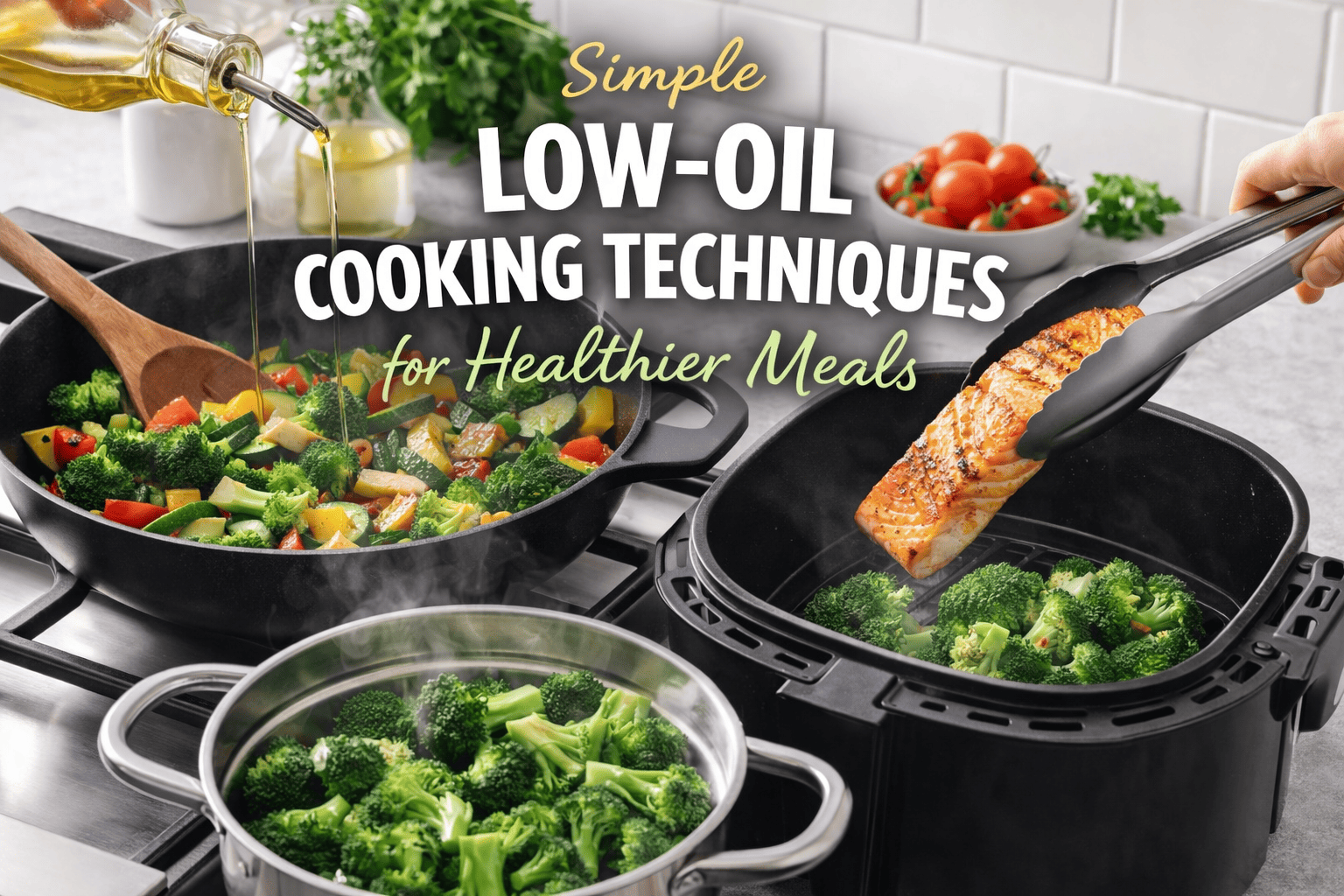
Cooking at home is one of the best ways to take control of your health, but traditional methods that rely heavily on oil can add unnecessary calories and fats to your meals. Reducing oil doesn’t mean sacrificing flavor—there are simple techniques that make meals just as delicious while keeping them lighter and healthier.
Whether you’re trying to lose weight, manage cholesterol, or simply eat cleaner, adopting low-oil cooking methods can transform your daily meals without making cooking complicated. In this guide, we’ll explore practical techniques, tips, and meal ideas for creating flavorful dishes with minimal oil.
Why Reduce Oil in Cooking?
Excess oil in meals can lead to:
-
Higher calorie intake, which may contribute to weight gain
-
Increased unhealthy fats, affecting heart health
-
Greasier textures that can overwhelm delicate flavors
Cooking with less oil helps you enjoy:
-
Better flavor from natural ingredients
-
Improved nutrient retention
-
Lighter, more digestible meals
1. Steaming: Retain Flavor and Nutrients
Steaming is one of the healthiest ways to cook vegetables, fish, and even dumplings. It preserves vitamins, minerals, and natural taste.
How to Steam
-
Fill a pot with 1–2 inches of water and bring to a boil.
-
Place a steamer basket over the water.
-
Add vegetables, fish, or lean meat.
-
Cover and steam until cooked through.
Benefits
-
No added oil is needed.
-
Vegetables retain their bright colors and crispness.
-
Ideal for leafy greens, broccoli, cauliflower, and fish fillets.
Flavor Tips
-
Add herbs or lemon slices to the water for subtle flavor infusion.
-
Drizzle with a teaspoon of olive oil or a squeeze of lemon after steaming for extra taste.
2. Baking and Roasting
Baking and roasting use dry heat to cook food evenly, making it perfect for vegetables, chicken, and fish.
How to Bake or Roast with Minimal Oil
-
Preheat the oven to 200°C (400°F).
-
Place ingredients on a baking sheet lined with parchment paper.
-
Lightly brush or spray with minimal oil (1–2 teaspoons).
-
Roast until golden and cooked through.
Foods to Try
-
Sweet potatoes, carrots, bell peppers
-
Chicken breast or thighs
-
Salmon fillets or tofu
Extra Flavor Tricks
-
Use spices like paprika, garlic powder, cumin, or rosemary.
-
Add a splash of lemon juice or vinegar before serving.
3. Sautéing with Water or Broth
Sautéing doesn’t always require oil. Water, vegetable broth, or low-sodium stock can replace oil while keeping food moist.
How to Sauté Without Oil
-
Heat a non-stick pan over medium heat.
-
Add 2–3 tablespoons of water or broth.
-
Add chopped vegetables or protein and stir frequently.
-
Add more liquid if it evaporates before cooking is done.
Best Foods for Low-Oil Sautéing
-
Onions, bell peppers, zucchini
-
Mushrooms, spinach, kale
-
Chicken strips or tofu
Pro Tip
Finish the dish with fresh herbs or a light drizzle of oil for taste without overloading calories.
4. Grilling or Broiling
Grilling uses direct heat to cook foods quickly, creating a smoky flavor without needing much oil.
How to Grill with Minimal Oil
-
Preheat the grill or broiler.
-
Lightly brush protein or vegetables with a small amount of oil.
-
Cook until the surface is charred and the interior is done.
Ideal Foods
-
Chicken, turkey, or fish
-
Bell peppers, eggplants, zucchini
-
Portobello mushrooms
Flavor Enhancers
-
Marinades with lemon, yogurt, or herbs can add flavor without oil.
-
Use foil packets to steam and grill vegetables simultaneously.
5. Using Non-Stick or Ceramic Cookware
Non-stick and ceramic pans allow cooking with little to no oil, making it easier to reduce added fat.
Tips
-
Preheat the pan before adding food.
-
Use a small brush of oil or spray lightly if necessary.
-
Stir frequently to prevent sticking.
Why It Helps: Food cooks evenly, stays flavorful, and reduces the temptation to overuse oil.
6. Poaching
Poaching gently cooks food in water, broth, or milk. It’s perfect for delicate proteins like eggs, fish, or chicken.
How to Poach
-
Bring liquid (water, broth, or milk) to a gentle simmer.
-
Add protein or eggs.
-
Cook until done, maintaining a gentle heat.
Benefits
-
Minimal or no oil required.
-
Keeps food moist and tender.
-
Retains natural flavor and nutrients.
7. Air Frying
Air fryers use hot circulating air to create a crispy texture similar to deep-frying but with up to 80% less oil.
Tips for Air Frying
-
Lightly coat foods with a teaspoon of oil for extra crispiness if desired.
-
Shake or turn items halfway through cooking for even browning.
-
Great for vegetables, chicken wings, fish sticks, and tofu.
Quick Ideas
-
Roasted chickpeas with spices
-
Sweet potato fries
-
Breaded chicken tenders using whole wheat breadcrumbs
8. Flavor Without Oil
Even when reducing oil, your meals can remain flavorful:
-
Herbs & Spices: Basil, rosemary, thyme, garlic powder, cumin, turmeric, paprika
-
Acids: Lemon juice, vinegar, or lime zest brightens flavors
-
Umami Boosters: Soy sauce, low-sodium miso, nutritional yeast
-
Aromatics: Onions, garlic, ginger, and fresh chilies
These additions enhance taste naturally without relying on fat.
9. Meal Ideas Using Low-Oil Techniques
Breakfast
-
Veggie omelet: Cook eggs with water or broth, add spinach, tomatoes, and mushrooms.
-
Overnight oats: Mix oats, milk, chia seeds, and fruit—no oil needed.
Lunch
-
Quinoa salad with roasted vegetables: Roast veggies with minimal oil and toss with cooked quinoa.
-
Grilled chicken wraps: Use grilled chicken, lettuce, cucumber, and yogurt dressing in a whole wheat wrap.
Dinner
-
Baked salmon with asparagus: Roast salmon and asparagus with lemon and herbs.
-
Stir-fried tofu and broccoli: Use a splash of water or broth to sauté instead of oil.
Snacks
-
Air-fried chickpeas with paprika
-
Fresh vegetable sticks with hummus
10. Tips for Reducing Oil Without Sacrificing Taste
-
Measure oil carefully: A teaspoon goes a long way—avoid free-pouring.
-
Cook at lower heat: Prevents burning and allows flavors to develop naturally.
-
Add oil at the end: Use a drizzle of high-quality olive oil or sesame oil after cooking.
-
Focus on textures: Roasting and air-frying give crispy textures without deep-frying.
-
Experiment with flavor: Herbs, spices, citrus, and umami seasonings make meals delicious even with minimal fat.
Final Thoughts
Low-oil cooking is a practical, easy way to make meals healthier without compromising taste. By using techniques like steaming, baking, poaching, sautéing with water, and air frying, you can reduce unnecessary fats, retain nutrients, and enjoy lighter, flavorful meals.
Once you adopt these methods, healthy cooking becomes less about restriction and more about enhancing natural flavors, making your meals satisfying and nourishing for your entire family.